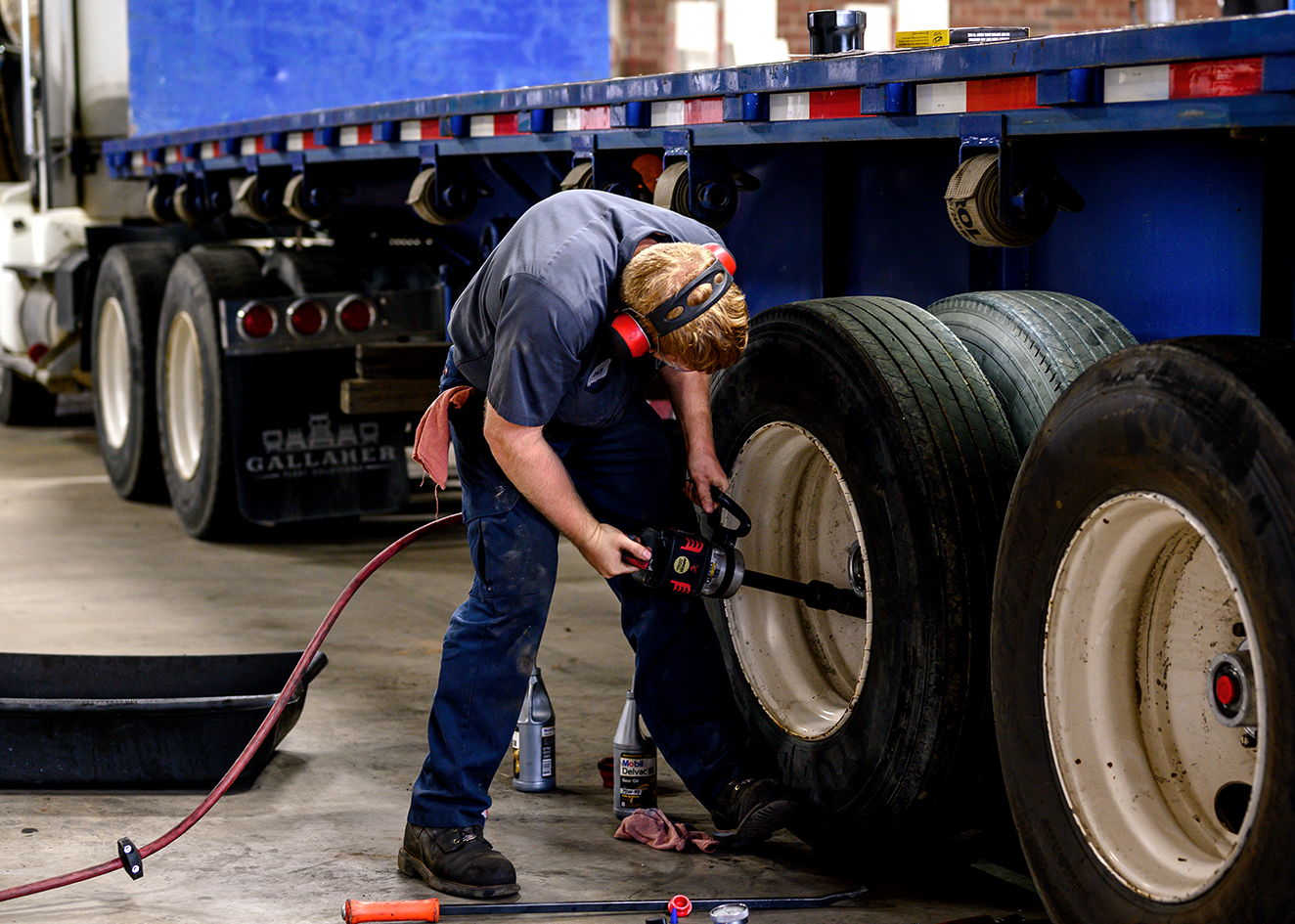
Heavy-duty truck alignment services are important for both truck driver safety and truck longevity. Our alignment services include four-wheel, front end, and steering truck alignments.
Heavy-duty truck alignment services are important for both truck driver safety and truck longevity. Truck alignment services can include four-wheel, front end, or steering truck alignments. When trucks are properly aligned, drivability is improved while fuel efficiency is increased. Tires also last longer when heavy-duty truck alignments are done regularly at a high-quality shop like Gallaher Fleet Solutions.
Heavy-duty trucks should have a wheel alignment every 50,000–60,000 miles or every six months. However, it is best to check the alignment immediately if the truck experiences handling issues, has uneven tire wear, or hits potholes. Proper alignment prevents tire damage, fuel inefficiency, and suspension wear.
If you need alignment services for your light, medium, or heavy-duty truck, our team at Gallaher Fleet Solutions is just a phone call away. Our facility is well-equipped with advanced technology and expert technicians who can have your truck back on the road and heading in a straight line as quickly as possible.
Not sure an alignment is right for your truck? Oversize tires and modified suspensions can change the answer. Call the shop nearest you, or send a message and we'll get back to you the same business day.
Misaligned trucks are harder to turn, which can lead to accidents or even rollovers. Professional equipment — not camber gauges and plumb bobs — delivers consistent, safe results every time.
Prompt inspection can prevent further damage to suspension and driveline components. The most common signs include:
Uneven or one-sided tire wear is one of the clearest signs of misalignment — and it shortens the life of expensive commercial tires fast.
If your truck drifts or pulls to one side on a straight, level road, the wheels are likely out of alignment and working against each other.
A steering wheel that sits off-center while driving straight is a common indicator — especially after hitting a pothole or curb.
Steering vibrations and reduced fuel efficiency often point to alignment problems. Overly positive or negative camber is dangerous and should be corrected right away.
Misalignment leads to premature tire wear, lower fuel efficiency, and suspension damage. We break down the three alignment angles — camber, toe, and caster — the warning signs to watch for, and how often your fleet should be checked.
